
 By
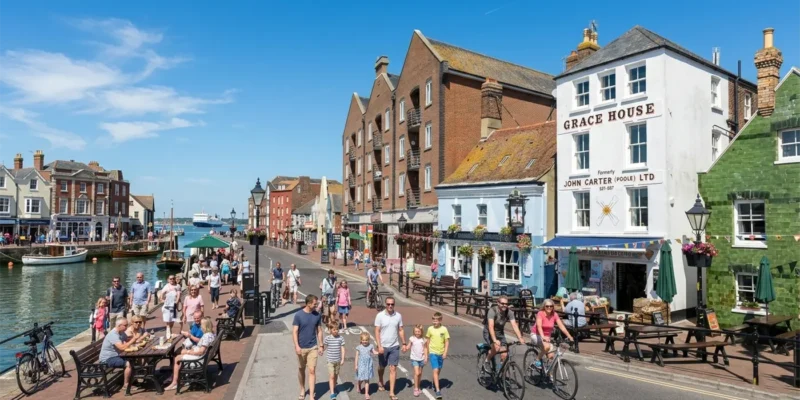
By Dorset keeps coming up in conversations about where people actually want to live, and not without good reason. It has the coastline, the countryside, the market towns, and that rare sense of a place that has not completely lost itself to modernisation. For anyone seriously weighing up a move, speaking with experienced estate agents in Dorset early on tends to save a great deal of time, because the county is far more varied than it looks from the outside, and local knowledge makes a genuine difference.
What Dorset is not, though, is a simple decision. It suits some people enormously well and catches others off guard. Getting under the skin of the place before committing is time well spent.
What Makes Dorset Feel Different
Spending even a weekend in Dorset tends to shift something in people. The Jurassic Coast is genuinely extraordinary, not in a way that photographs fully capture, but in the way it feels to stand on it. The countryside inland is quieter than most people expect, and the market towns have a texture to them that does not feel performed or prettified for visitors.
Residents often describe a kind of decompression that happens after moving there. The daily grind loosens. There is time for things that kept getting pushed aside in city life. Whether that is down to the landscape, the pace, or simply the absence of the usual urban noise is hard to say; probably all three.
That said, anyone planning a move based solely on a summer visit owes it to themselves to see the place in February as well. Coastal villages that hum with life in August can feel very still indeed once the visitors have gone. That stillness suits plenty of people perfectly, but it is worth knowing in advance rather than discovering later.
The Real Advantages of Living in Dorset
The natural surroundings are genuinely hard to beat: Access to good coastline and open countryside is not something most people fully appreciate until they have lived without it for years. Dorset offers both, within easy reach of most towns and villages in the county.
Life moves at a pace that most people find they actually prefer: There is growing evidence that slower, less pressured daily routines have real benefits for health and general well-being. Dorset residents tend to spend more time outside, eat better, sleep better, and report lower stress than their counterparts in major cities. That is not a coincidence.
Communities here tend to be genuinely connected: Neighbours know each other. Independent shops and local markets thrive in a way they have long since stopped doing in many urban areas. There is a social fabric to Dorset towns and villages that is difficult to manufacture and easy to take for granted once one is part of it.
Property budgets go considerably further: Relocating from London or the South East often means finding that the same money buys something substantially better in Dorset. Not everywhere, Sandbanks in Poole is famously expensive, but across much of the county, buyers find more space, more character, and more garden than they had any right to expect.
The school options are strong in several parts of the county: Bournemouth and Poole are particularly well regarded, with a range of state, selective, and independent schools that draw families from across the region.
History and culture run deeper than many expect: Dorset is not just scenery. It has Roman remains, Iron Age hillforts, a literary heritage that includes Thomas Hardy, and market towns that have been going about their business for centuries. Day-to-day life in the county carries a weight and continuity that newer places simply cannot replicate.
Crime rates and congestion are both considerably lower than in major cities: For families in particular, this is not a minor consideration. The relative safety and calm of Dorset is one of those advantages that becomes more apparent the longer one lives there.
Town Life or Village Life: Worth Thinking Through Carefully
Where within Dorset matters as much as whether to move there at all. The county covers a lot of ground, and different parts of it feel quite distinct.
Dorchester functions well as a county town base, practical without being dull, and with decent connections. Sherborne has the kind of high street that people assume no longer exists anywhere: proper independent shops, a good atmosphere, and a sense of community that newcomers often find surprising. Bridport attracts a creative crowd and has a relaxed, slightly unconventional feel that suits people who want something a little different.
Rural villages are another matter. The Blackmore Vale, for instance, is deeply pastoral and genuinely peaceful, but it does ask something of its residents in return. Shops are fewer. Healthcare requires more planning. A car is not optional. These are not complaints, simply realities that are better understood before the move than after.
The question worth sitting with is what a normal Tuesday actually looks like. School runs, work arrangements, shopping habits, social life, all of these shape which part of Dorset is the right fit, and the answer is different for almost everyone.
Property Prices: The Honest Version
Dorset’s property market is not one thing. Coastal areas, particularly around Poole Harbour and Sandbanks, carry some of the highest residential prices outside central London. Moving a few miles inland changes the picture considerably.
Period properties are more common here than in most parts of the country. Stone cottages, converted barns, and Georgian townhouses appear with regularity, and they hold their character in a way that modern builds tend not to. Buyers coming from cities sometimes find the choice almost disorienting after years of looking at identikit new builds.
The market in well-regarded areas does move quickly. Properties near good schools or with straightforward rail access tend not to linger. Anyone serious about a particular part of the county would do well to act decisively when the right place appears.
Transport: Worth Being Clear-Eyed About
Rail links to London exist and are usable. Journeys typically fall between two and three hours, depending on route and time of day. For the occasional trip, that is perfectly reasonable. For anything more frequent, it becomes a genuine factor in the quality of life.
Roads in Dorset are largely rural. Single carriageways are the norm across much of the county, and summer brings tourist traffic that can slow things down considerably. People who have commuted by motorway for years often find the adjustment to Dorset’s road network takes some getting used to.
Remote working has changed this conversation significantly. For those no longer tied to a daily commute, the transport limitations of Dorset shrink considerably in importance. The county suits that kind of working life very well indeed.
Practical Things That Are Worth Knowing Early
Rural properties in Dorset sometimes come with oil heating and private drainage rather than mains services. Neither is a problem, but both involve running costs and maintenance considerations that are worth factoring into any budget.
Broadband speeds have improved substantially in recent years, but rural spots can still lag behind. Anyone planning to work from home should check actual speeds for a specific address rather than relying on area averages.
Parking in older towns can be tighter than expected, particularly for households running more than one vehicle. And tourist season brings a level of activity to certain coastal areas that year-round residents experience rather differently from visitors.
None of this is unusual for a largely rural county. It is simply worth knowing.
Adjusting to How Things Work Here
Dorset runs at its own pace, and that pace is not always immediately obvious to people arriving from cities. Shops close earlier. Services are sometimes less immediately available. Some things require more forward planning than they once did.
Most people who have lived there for a year or two describe this not as an inconvenience but as a recalibration. The urgency that city life cultivates turns out to be largely unnecessary. Things still get done. Life still works. It just feels different, and for most people who have made the move, different turns out to be considerably better.
So, Is Dorset the Best Place to Live?
That depends almost entirely on the person asking. For those who find that the things they value most are space, quiet, community, access to the outdoors, and a pace of life that leaves room for actually living, Dorset makes a very strong case for itself. People who move there and find their feet tend to stay.
For those who need the city, who draw energy from urban density, who rely on fast transport or a wide range of readily available services, the adjustment can be harder than expected.
The most useful thing anyone considering a move can do is visit properly, not just the obvious coastal highlights in good weather, but different parts of the county, at different times of year, with an honest eye on what day-to-day life would actually involve. Dorset rewards that kind of careful attention, and for the right person, it tends to deliver on everything it promises.